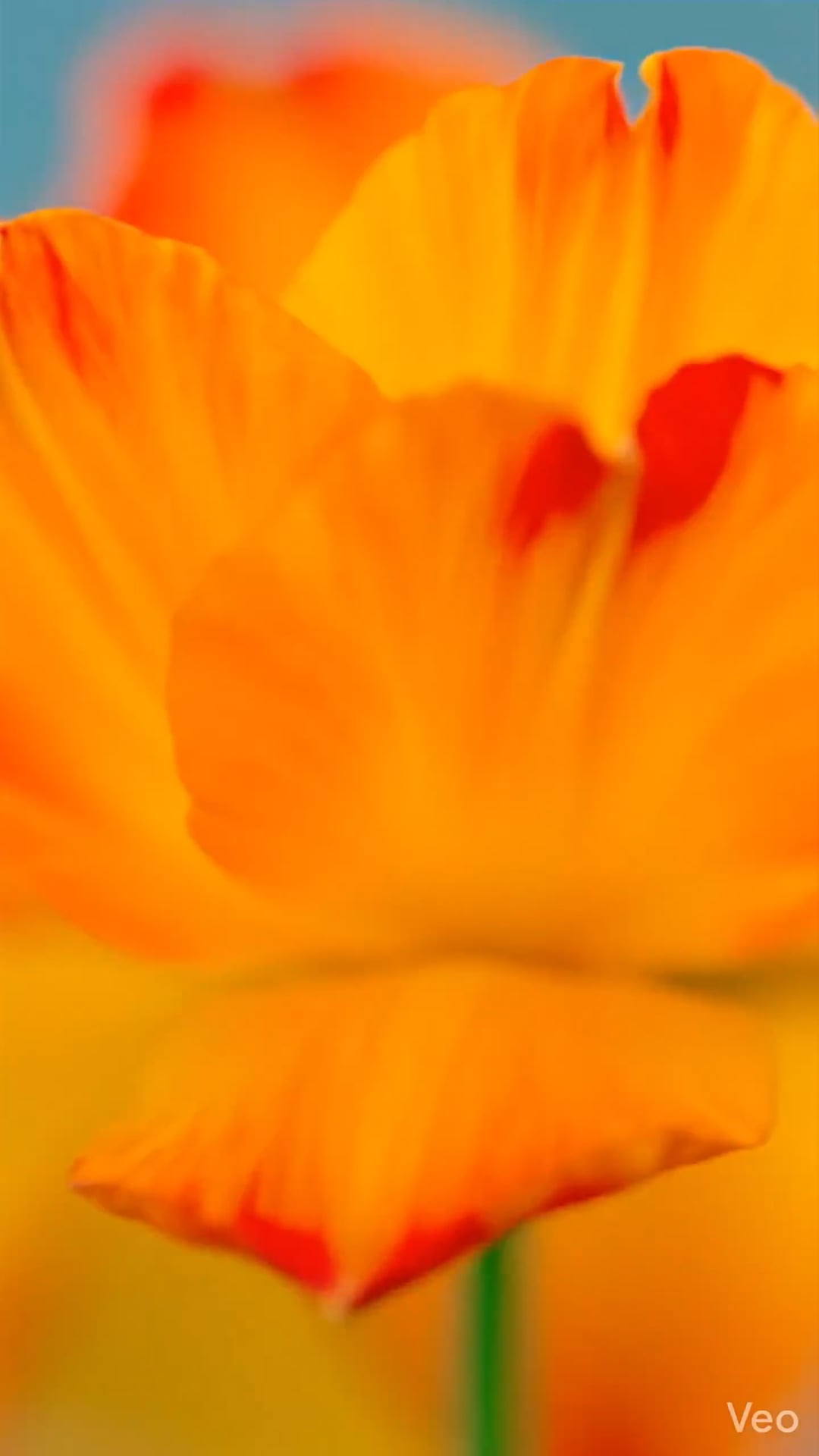
Party in the
Garden
Tuesday, June 2, 2026
6:30 p.m.
Honoring
Jo Carole Lauder
Betye Saar
Martin Puryear
Program
Cocktails 6:30 p.m.
Dinner 7:30 p.m.
After-Party 9:00 p.m.–12:00 a.m.
The Museum of Modern Art
11 West 53rd Street, New York
For more information, contact specialevents@moma.org
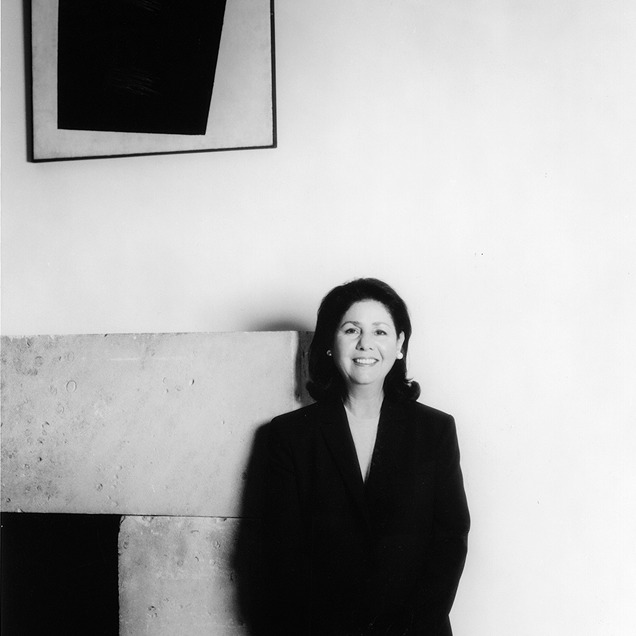
Photo: Lillian Birnbaum
Jo Carole Lauder has long been devoted to supporting the arts and civic causes. Mrs. Lauder has worked extensively with The Museum of Modern Art in New York, where she was the President of The International Council for 16 years and is currently President Emerita. She has been a member of The Contemporary Arts Council at MoMA since 1970, has served as Chair and is now Honorary Chair, and was also the founder of the Junior Associates. She has also served as Co-Chair, for several years, of the Museum’s major annual fundraising event, Party in the Garden. Mrs. Lauder is a member of the Trustee Committee on Film and a former member of the Architecture and Design and Photography Committees. She is also a member of MoMA’s Chairman’s Council. She is also a member and former Co-Chair of the Trustees’ Council at the National Gallery of Art in Washington, DC.
With the Checkerboard Film Foundation, a non-profit film and production company dedicated to the arts, Mrs. Lauder was an associate producer of a documentary on the history of the Phillips Collection in Washington, DC, and producer of the films Ellsworth Kelly: Fragments and Sol LeWitt: Wall Drawings.
As the wife of the U.S. Ambassador to Austria, Mrs. Lauder promoted American cultural interests abroad. She was instrumental in the showing of two major exhibitions in Vienna: a print retrospective of Jasper Johns from The Museum of Modern Art; and works by Sol LeWitt. In Vienna, she was also active at the Secession, a building that her husband helped to restore, and furnished a wing in the Embassy residence with American folk art, which was later donated to the State Department.
Mrs. Lauder is Chairman of the Board of Directors of the Foundation for Art and Preservation in Embassies and is a member of the Board of Trustees of Independent Curators International (ICI); the Board of Trustees of the Mount Sinai Medical Center, where she has worked on many fundraising projects and has contributed, with her husband, the funds for the Jo Carole and Ronald S. Lauder Newborn Intensive Care Unit and the Jo Carole and Ronald S. Lauder Center for Maternity Care; and a member of the executive committee of the Board of Directors of the American Friends of the Israel Museum. Mrs. Lauder is a former member of the Dean’s Council of the Yale School of Art; a former trustee of the Chapin School; and a former member of the Board of the Homes for Life Foundation in Delaware, which provides permanent housing for individuals with developmental disabilities, empowering them to live as independently as possible. She was presented with the 2023 National Medal of Arts by President Joe Biden.
Mrs. Lauder was born and raised in Wilmington, Delaware, and received a BFA from the Tyler School of Fine Arts in Philadelphia in 1965. The Lauders have two daughters, and reside in New York City.
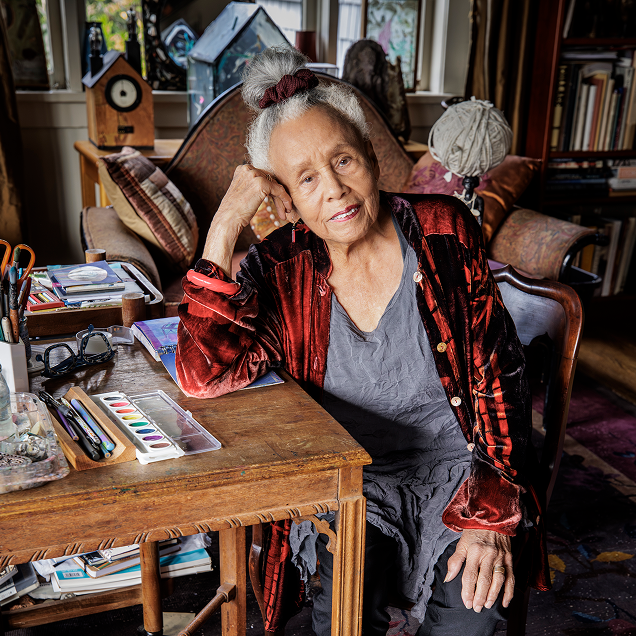
Betye Saar, January 2026. Courtesy of the artist and Roberts Projects Los Angeles. © David Sprague
As one of the artists who ushered in the development of assemblage art, Betye Saar’s practice reflects on African American identity, spirituality, and the connectedness between different cultures. Her symbolically rich body of work has evolved over time to demonstrate the environmental, cultural, political, racial, technological, economic, and historical context in which it exists.
For over seven decades, Saar has created art that explores the social, political, and economic underpinnings of America’s collective memory. She began her career at the age of 35 producing work that dealt with mysticism, nature, and family. Saar’s art became political in the 1970s, namely with the assemblage The Liberation of Aunt Jemima (1972), which activist and scholar Angela Davis has cited as the beginning of the Black Women’s Movement. Like many women who came to political consciousness in the 1960s, Saar takes on the feminist mantra “the personal is political” as a fundamental principle in her assemblage works. Her appropriation of Black collectibles, heirlooms, and utilitarian objects is an act of transformation through subversion. Among the older generation of Black American artists, Saar is without reproach and she continues to produce new work that inspires countless others.

Betye Saar. Black Girl’s Window. 1969
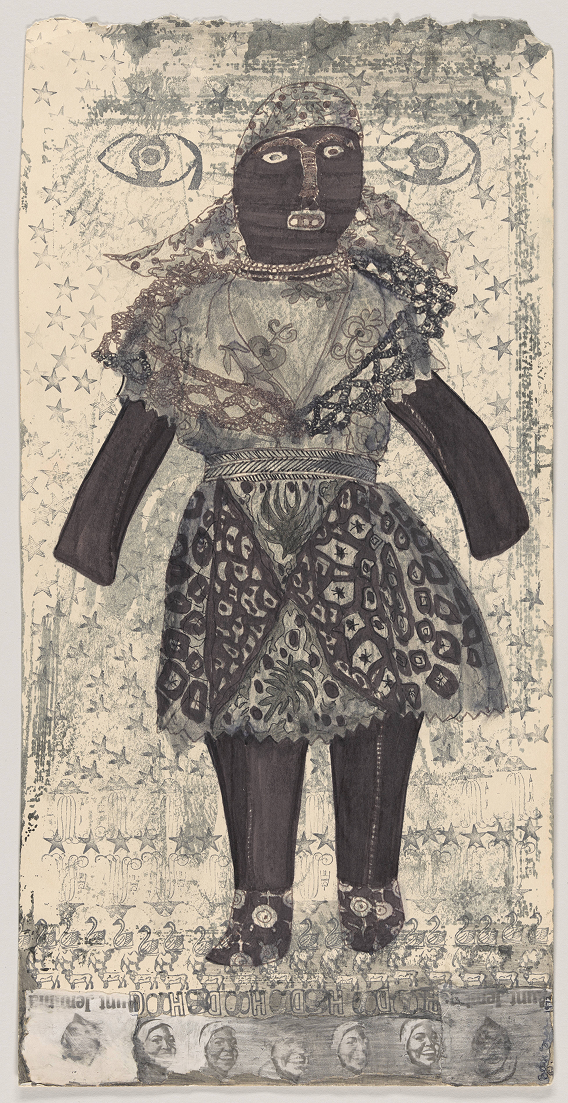
Betye Saar. Aunt Jemima and Hoo Doo Doll. 1972
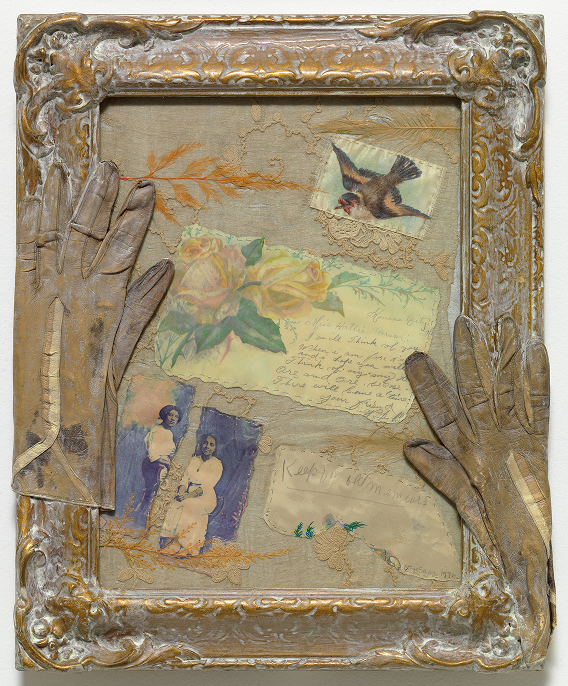
Betye Saar. “Keep for Old Memiors”. 1976
Betye Saar. Black Girl’s Window. 1969
Betye Saar. Aunt Jemima and Hoo Doo Doll. 1972
Betye Saar. “Keep for Old Memiors”. 1976
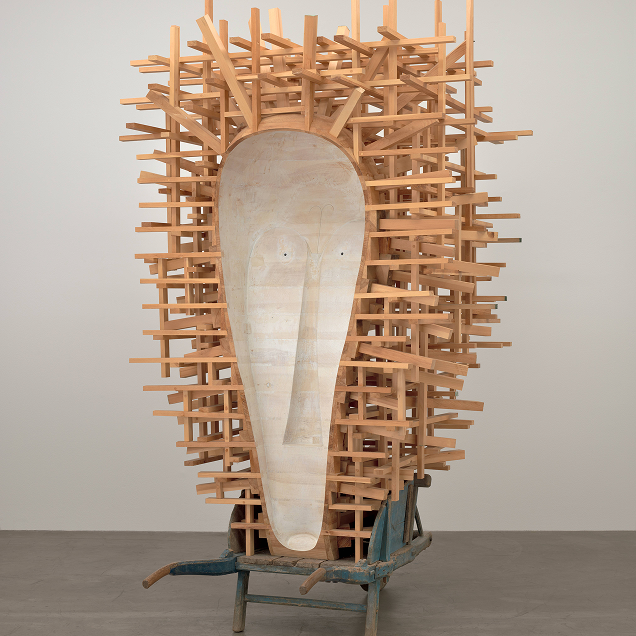
Martin Puryear. C.F.A.O. 2006–07. Painted and unpainted pine and found wheelbarrow. Gift of Sid Bass, Leon D. Black, Donald L. Bryant, Jr., Kathy and Richard S. Fuld, Jr., Agnes Gund, Mimi Haas, Marie-Josée and Henry R. Kravis, Jo Carole and Ronald S. Lauder, Donald B. Marron and Jerry Speyer on behalf of the Committee on Painting and Sculpture in honor of John Elderfield
Over six decades, Martin Puryear has created a body of work that touches on identity, culture, and history. Departing from the impersonal and machined aesthetic of Minimalism, the dominant sculptural movement of his formative years, Puryear’s work combines modernist abstraction with methods of traditional production derived from trades and crafts. His sculptures are quiet but deliberately associative, drawn from a huge and varied reserve of images and ideas informed by his extensive travels and endless curiosity about the world, with shapes inspired by the natural environment and ordinary objects, and made by direct engagement with materials such as wood, wire, tar, bronze, cast iron, steel, and granite.
Martin Puryear (b. 1941) was born in Washington, DC. His first one-person exhibition was in 1968, and since then he has exhibited throughout the world, including public commissions in Europe, Asia, and the United States. His work was featured in Documenta 9, and in 1989 he represented the United States at the São Paulo Bienal, where he was awarded the festival’s Grand Prize. In 2007, The Museum of Modern Art in New York organized a survey of his work, which traveled to the National Gallery of Art in Washington, DC, the San Francisco Museum of Modern Art, and the Modern Art Museum of Fort Worth. In 2015 the Art Institute of Chicago organized an exhibition of 50 years of his works on paper, which traveled to the Morgan Library and Museum in New York and the Smithsonian American Art Museum in Washington, DC. Puryear received a MacArthur Foundation award in 1989 and a National Medal of Arts from President Obama in 2011. In 2019 he represented the United States at the 58th Venice Biennale. Most recently, the Museum of Fine Arts, Boston, and the Cleveland Museum of Art co-organized the first substantial survey of the artist’s work in nearly two decades, which will travel to the High Museum of Art this fall.
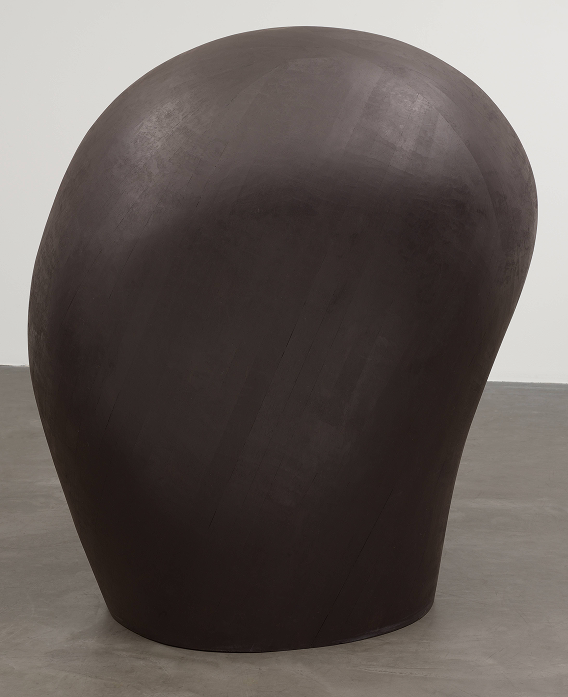
Martin Puryear. Untitled. 1997
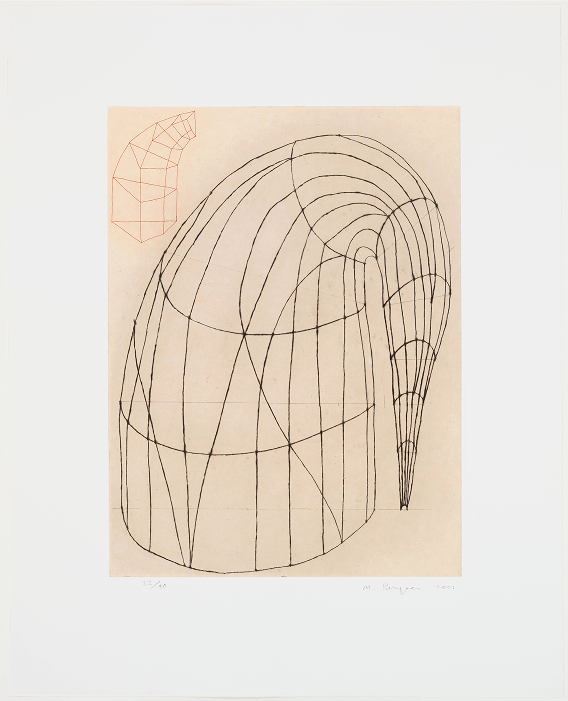
Martin Puryear. Untitled. 2007
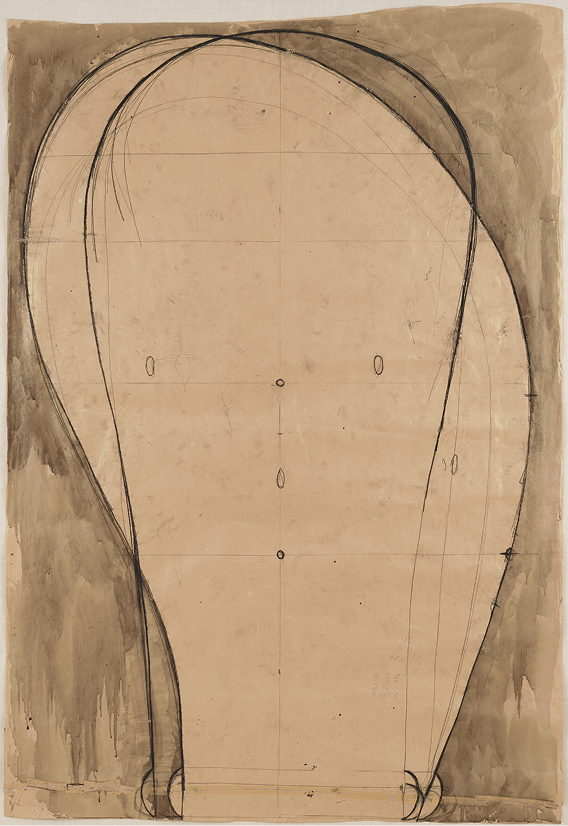
Martin Puryear. Untitled. 1993
Martin Puryear. Untitled. 1997
Martin Puryear. Untitled. 2007
Martin Puryear. Untitled. 1993